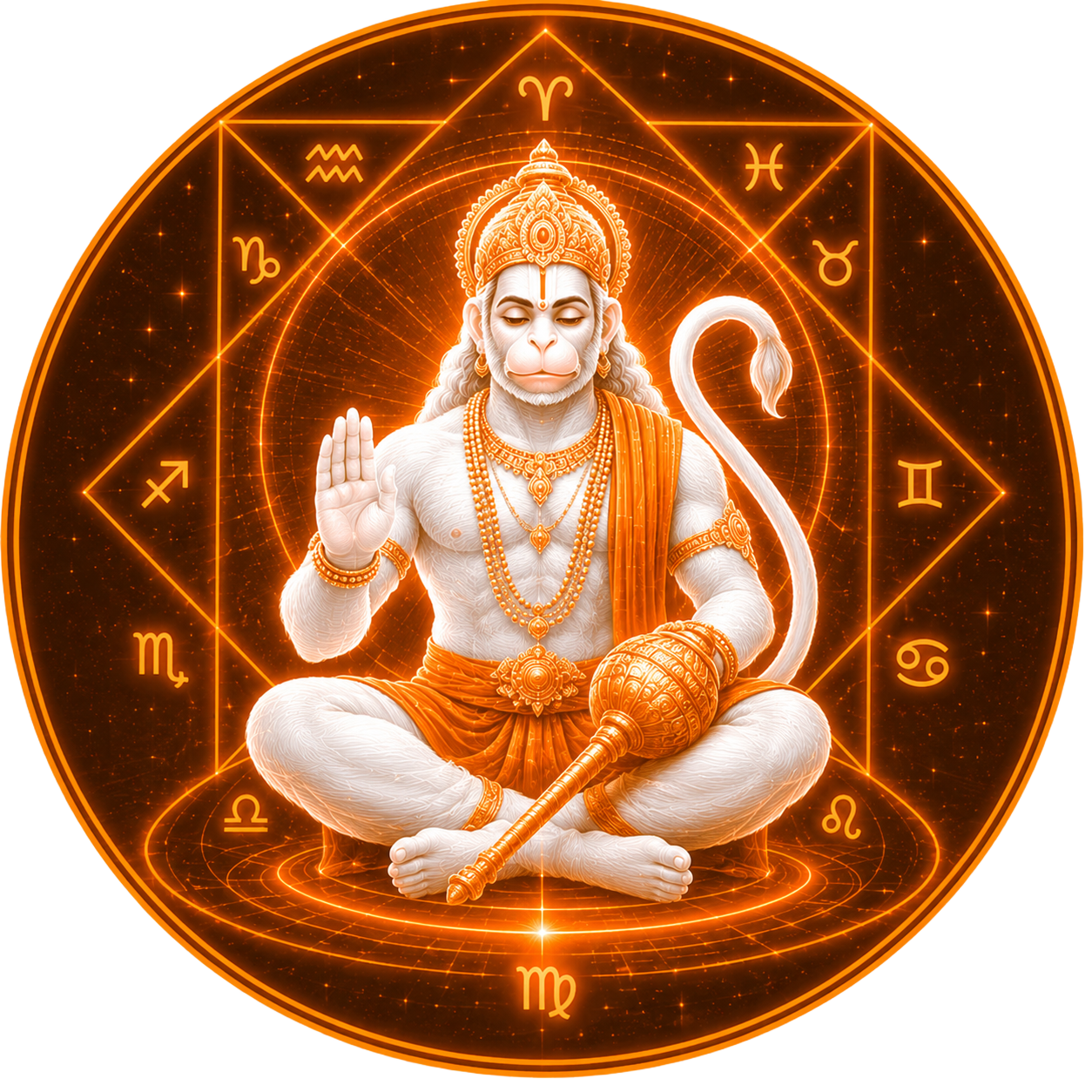
For Janmashtami 2026, understanding the precise astrological configuration at Lord Krishna's birth—specifically the Rohini Nakshatra and Midnight moment—is paramount for harnessing the festival's spiritual potency, especially for those seeking clarity on their karmic path and emotional well-being. This sacred day, known also as Krishna Jayanti 2026, presents an unparalleled opportunity for spiritual introspection and growth, far beyond mere celebratory rites.
What is the True Astrological Significance of Janmashtami?
Lord Krishna's birth is not merely a historical event; it is a celestial blueprint, a divine alignment captured in the very fabric of time. As per the revered texts like the Brihat Parashara Hora Shastra, which comprises over 100 chapters detailing every aspect of Jyotish, and the commentaries of Uttara Kalamrita, the moment of His advent in the dark confines of Kamsa's prison at Mathura was marked by specific planetary positions. He was born on the eighth day (Ashtami Tithi) of the waning moon (Krishna Paksha) in the Hindu month of Shraavana or Bhadrapada (depending on lunar calendar start), under the Rohini Nakshatra, as the clock struck midnight. The Moon, His ruling planetary force, was exalted in Vrishabha (Taurus) Rashi, where Rohini resides, creating a profoundly auspicious Yoga. A Nakshatra, for the uninitiated, is one of 27 lunar mansions, each spanning approximately 13 degrees and 20 minutes of the zodiac, and Rohini is traditionally associated with growth, creativity, and sustenance.
The Ascendant, or Lagna—the zodiac sign rising on the eastern horizon at the moment of birth—was Simha (Leo) in many traditional accounts, embodying regality and divine authority. However, some scholars and regional traditions calculate it as Vrishabha, especially for a midnight birth in the precise geographical location of Mathura, which further strengthens the Moon's influence. This intricate blend of Tithi, Nakshatra, Rashi (zodiac sign), and Lagna (ascendant) points to a unique cosmic energy. The Grahas (planets) were generally well-disposed, signifying His divine mission and unparalleled spiritual strength. This Janmashtami 2026, these ancient energies are rekindled, allowing us to tap into the very essence of His divine Leela.
The significance extends beyond mere observance; it’s about aligning with the cosmic rhythms that facilitated the manifestation of divinity. For practitioners of Jyotish, understanding Krishna's birth chart provides a masterclass in interpreting divine incarnations and the symbolism embedded within planetary placements. For instance, the placement of the Moon in its exaltation in Rohini Nakshatra speaks volumes about His role as a protector and nourisher of the world, whose very presence brought joy and fulfillment. This alignment doesn't just describe a past event; it creates an energetic template that recurs annually, offering a window for spiritual seekers.
How Does the Midnight Birth of Krishna Manifest in Your Janma Rashi?
The energetic signature of Lord Krishna's midnight birth, characterized by the strong Moon in Rohini Nakshatra, resonates uniquely with each individual's Janma Rashi, or Moon Sign. Your Janma Rashi is the zodiac sign where the Moon was positioned at the time of your birth, governing your emotions, mind, and intrinsic nature. On Janmashtami 2026, as the moon re-enters Rohini Nakshatra during the specific Ashtami Tithi, its energies become magnified, interacting with your natal Moon's placement.
For those with a Janma Rashi ruled by the Moon, like Karka (Cancer), this period can be intensely emotional, fostering deep introspection and a heightened sense of spiritual longing. You might feel a stronger pull towards devotional practices or experience vivid dreams. Individuals with a Vrishabha (Taurus) Moon, where Rohini Nakshatra resides, will find this period particularly fortifying, experiencing a profound sense of inner peace and material contentment, as the energies align directly with their inherent nature. It's akin to your internal emotional compass receiving a divine recalibration.
If your Moon is in a fiery Rashi like Simha (Leo) or Mesha (Aries), the energy of Krishna's birth might ignite your passion for righteousness and leadership, inspiring you to take decisive action rooted in dharma. Conversely, for dual signs like Mithuna (Gemini) or Kanya (Virgo), the influence could bring about a period of heightened intellectual curiosity about spiritual texts and a desire for meaningful dialogue. As a practitioner for over two decades at ASTROLIFE, I've observed that during this specific alignment, clients often report a surge in intuition and clarity regarding long-standing emotional challenges, almost as if Lord Krishna's divine wisdom is directly accessible. The specific transit of the Moon during midnight puja on Janmashtami becomes a personal astrological event for each Rashi, offering a tailor-made spiritual experience.
The interplay of Dasha (planetary period) you are currently running also modulates this effect. If you are in a Moon Dasha or an Antardasha (sub-period) of the Moon, the impact of Janmashtami's lunar energies will be particularly pronounced, making it a critical time for spiritual sadhana. Conversely, if your Dasha is ruled by a planet inimical to the Moon, such as Rahu, this period might bring an opportunity to confront and transcend deeply rooted emotional insecurities, using Krishna's playful yet profound wisdom as your guide. The Uttara Kalamrita, a seminal text, precisely delineates such interplays, offering guidance on how specific planetary combinations impact an individual's spiritual disposition. This isn't about generic blessings; it's about a specific cosmic influence impacting your individual Kundali (birth chart).
How Can We Align Our Janmashtami Puja with Cosmic Energies for Maximum Benefit?
Aligning your Janmashtami puja with the precise cosmic energies requires more than routine rituals; it demands an understanding of the astrological moment. The core of Janmashtami 2026 celebration lies in the midnight puja Janmashtami, precisely when the Ashtami Tithi and Rohini Nakshatra converge. This is the moment of divine manifestation. The traditional practice involves bathing the idol of Bal Gopal (baby Krishna), adorning Him, offering specific bhog (food offerings) like Makhan-Mishri (butter and rock candy), and singing devotional songs (bhajans) until midnight. But astrologically, the focus should be on the transition of the Moon into Rohini Nakshatra, which might not perfectly align with the calendar midnight in your specific location.
For maximum benefit, ascertain the precise timing of Rohini Nakshatra's presence during the Ashtami Tithi in your specific city for Janmashtami 2026. ASTROLIFE provides detailed Panchang (Hindu calendar) data, which can guide you to the exact muhurta. Engaging in meditation or chanting during this precise window amplifies the spiritual impact exponentially. Reciting the Maha Mantra “Hare Krishna Hare Krishna, Krishna Krishna Hare Hare, Hare Rama Hare Rama, Rama Rama Hare Hare” 108 times during this specific window can cleanse your emotional body and connect you deeply with Lord Krishna’s joyful energy. This is not about superficial devotion; it's about tapping into the divine wavelength.
Dahi Handi, the joyous tradition of breaking a pot of curd, symbolizes Krishna's playful nature and His ability to overcome obstacles. While it's primarily a cultural celebration, its spiritual significance lies in collective effort and devotion. Participating, even symbolically, fosters community spirit and dissolves individual ego, reflecting the unity that Krishna advocated. Offering a 'balidaan' (offering) of your internal struggles or negative tendencies to the divine fire (Havan) during the day can also be deeply transformative. Consider offering yellow flowers or sandalwood paste, items sacred to Vishnu, to His idol. The principle is to engage all senses and the mind in devotion, making the external ritual an internal spiritual journey. For those with challenging planetary periods (Dasha) or afflictions to their natal Moon, this puja offers a powerful remedy for emotional turbulence.
A crucial, often overlooked, aspect is a vow of celibacy and sattvic living during the 24-hour period leading up to the midnight puja. This purification of body and mind makes one a more receptive vessel for the divine energies. Fasting, especially a Nirjala Vrat (fast without water), if health permits, further enhances spiritual purification, allowing for a deeper connection during the auspicious hours of Krishna Jayanti. These actions aren't punitive; they're preparatory, designed to elevate your consciousness and make your intentions pure and potent.
What Common Misconceptions Obscure the Deeper Meaning of Krishna Jayanti?
One of the most pervasive misconceptions about Krishna Jayanti, even amongst many ardent devotees, is the overemphasis on the calendar date without considering the nuanced astrological timing of Lord Krishna's birth. Many traditions observe Janmashtami simply when the Ashtami Tithi (eighth lunar day) occurs. However, the true astrological potency, as outlined in classical texts, hinges on the simultaneous alignment of Ashtami Tithi *with* Rohini Nakshatra *and* the specific Lagna (Ascendant) at Mathura's midnight. For Janmashtami 2026, while the Tithi might be observed on one day, the peak of Rohini Nakshatra might actually extend into the early hours of the next calendar day or be concentrated in a specific midnight window. This subtle distinction is paramount for a Jyotish practitioner. It's not just "Ashtami"; it's "Ashtami Rohini" and the precise moment of midnight.
Another common misinterpretation is viewing Dahi Handi merely as a fun sport, divorced from its spiritual roots. While joyful, its essence lies in the unity, resilience, and symbolic breaking of ego (the pot) to reach for divine bliss (the Dahi or Makhan). It’s not just about forming a human pyramid; it's about collaborative aspiration towards a higher goal, much like the gopis and gopas helped Krishna reach for butter, symbolizing the seeker's journey towards spiritual realization. The exuberance is a manifestation of bhakti, not just merriment.
Furthermore, many believe that observing Janmashtami is solely for those who follow Vaishnavism. While Lord Krishna is a central figure in Vaishnava traditions, His teachings in the Bhagavad Gita transcend sectarian boundaries, offering universal principles of dharma, karma, and moksha (liberation). The astrological blueprint of His birth carries energies of divine balance, wisdom, and selfless action that are beneficial to anyone, regardless of their spiritual path. The midnight puja Janmashtami is a cosmic reset button, available to all who sincerely seek it.
Finally, some individuals mistakenly believe that simply performing rituals guarantees benefits. Jyotish, as a science, emphasizes the alignment of internal intention with external action. Without a conscious understanding of the energies at play, and a sincere heart, rituals can become hollow. The "Bhav" or inner feeling and intention behind your Janmashtami 2026 worship are far more significant than the elaborate nature of the external rites. It's the purity of your devotion, amplified by the precise astrological window, that truly manifests blessings. As of 2026, this deeper understanding is becoming increasingly vital in our quest for authentic spiritual connection.
सामान्य प्रश्न
Q: What is the ideal time for midnight puja on Janmashtami 2026?
A: The ideal time for the midnight puja on Janmashtami 2026 is precisely when the Ashtami Tithi and Rohini Nakshatra are concurrently active at the midnight hour in your specific geographical location. This confluence, often referred to as 'Ashtami Rohini', marks the exact astrological moment of Lord Krishna's birth. Consulting a precise Panchang, like those provided by ASTROLIFE, for your city is crucial to identify this auspicious muhurta.
Q: How does Dahi Handi relate to astrology?
A: While Dahi Handi is a cultural celebration of Krishna's playful nature, its astrological relevance lies in the collective energy and symbolism. It encourages unity, resilience, and overcoming challenges together, mirroring Krishna's life lessons. Psychologically, it helps in breaking egoistic tendencies and fostering community spirit, which are beneficial for mental and emotional well-being under the lunar influence of Janmashtami.
Q: Can non-Vaishnavites observe Janmashtami for astrological benefits?
A: Absolutely. Janmashtami's astrological energies, especially the potent combination of Ashtami Tithi and Rohini Nakshatra, offer universal spiritual benefits irrespective of one's specific religious affiliation. Lord Krishna's teachings on dharma and karma are universal, and anyone can connect with these energies through sincere meditation, prayer, or specific remedies aligned with their birth chart for emotional balance and spiritual growth.
Q: What if Rohini Nakshatra isn't active exactly at midnight on Janmashtami?
A: This is a critical point. If Rohini Nakshatra does not coincide precisely with midnight on the Ashtami Tithi in your location, the more astrologically potent time for worship would be the duration when both Ashtami Tithi and Rohini Nakshatra are active, even if it's slightly before or after the calendar midnight. Prioritizing the nakshatra's presence enhances the spiritual reception, as it's the specific lunar mansion of Krishna's birth.
Q: Are there specific offerings or chants recommended for my Moon Sign during Janmashtami 2026?
A: While general offerings like Makhan-Mishri are universally auspicious, you can tailor your devotion based on your Moon Sign (Janma Rashi). For fiery signs like Mesha (Aries), chanting Vishnu Sahasranama might be energizing. Water signs like Karka (Cancer) might find peace in offering milk and water, while earthy signs like Vrishabha (Taurus) can offer sweets and flowers. The Maha Mantra “Hare Krishna” is universally beneficial for all Moon Signs.