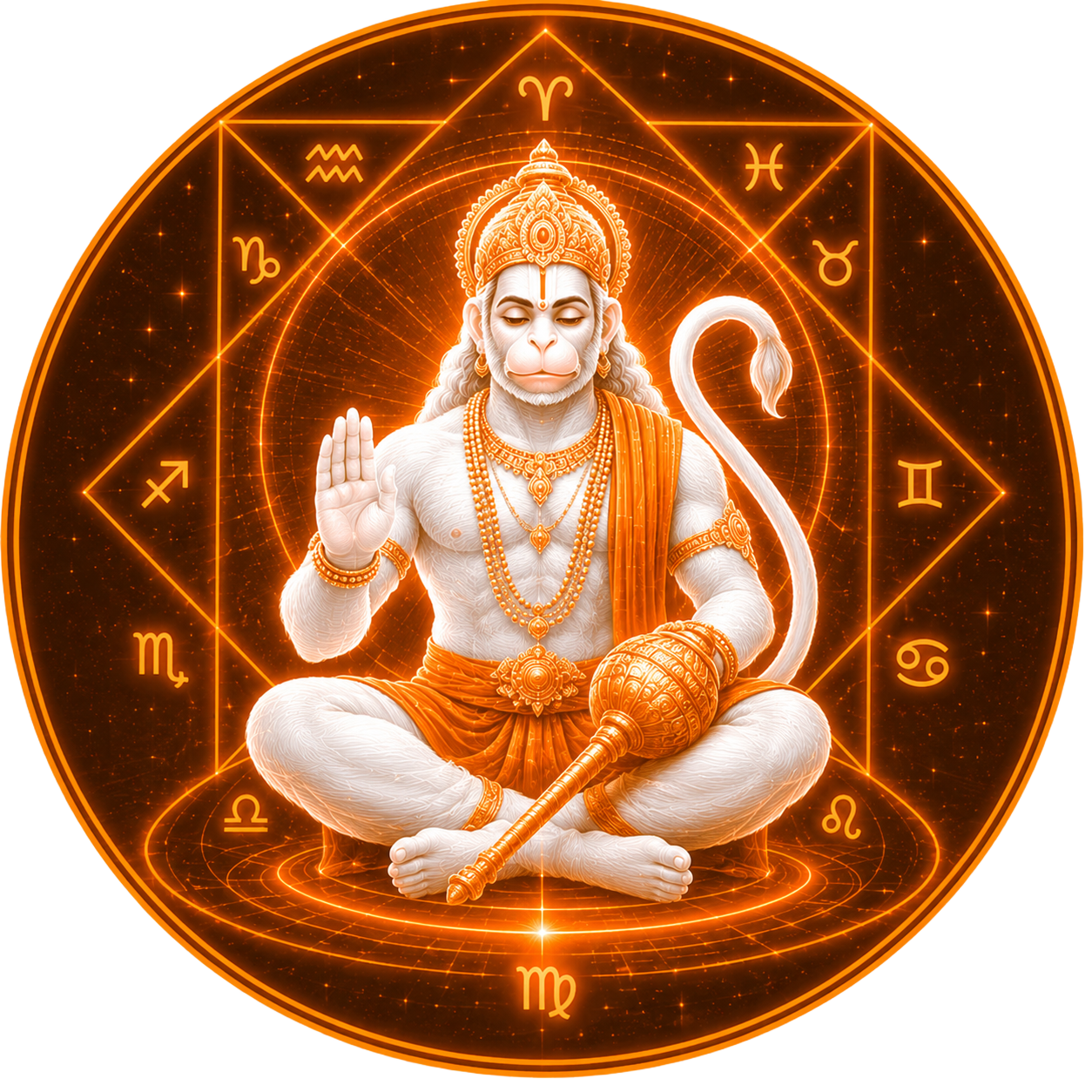
Sharad Navratri 2026, commencing on Thursday, October 9, represents a unique confluence of cosmic energies and spiritual opportunity, serving as a powerful annual period for profound inner purification and the invocation of divine feminine power. This period is not merely a festival of external rituals but a scientifically aligned window for energetic realignment and spiritual growth, deeply rooted in the principles of Jyotish.
What is the Astrological Significance of Sharad Navratri?
Sharad Navratri marks the beginning of the auspicious Hindu lunar month of Ashwin, specifically during the Shukla Paksha (waxing phase of the moon). This nine-night festival, dedicated to Maa Durga and her various forms, is a period of immense spiritual potency. In Vedic astrology, known as Jyotish – the 'science of light' – the celestial movements and planetary positions during such transitions hold profound meaning. As of 2026, the Sun will be transiting the cardinal air sign of Libra during much of Sharad Navratri, a period often associated with balance, introspection, and the pursuit of harmony.
Each of the nine forms of Devi Durga – Shailaputri, Brahmacharini, Chandraghanta, Kushmanda, Skandamata, Katyayani, Kalaratri, Mahagauri, and Siddhidatri – are not merely mythological figures; they embody distinct cosmic energies and psychological archetypes, each linked to specific planetary influences and Gunas (qualities of nature). For instance, Shailaputri, the daughter of the mountains, relates to the grounding energy of the Moon (Chandra), symbolizing purity and stability. Brahmacharini is often associated with Mars (Mangal), representing austerity and discipline. Chandraghanta, with her crescent moon and bell, connects to Venus (Shukra) and the creative expression of sound.
The Nakshatra (lunar mansion) governing these nine days also shifts, bringing different energetic currents. A single Rashi (zodiac sign) encompasses 2.25 Nakshatras, and understanding their subtle influences is crucial in Jyotish. As detailed in the Brihat Parashara Hora Shastra, a seminal text on Vedic astrology, the disposition and strength of the planets in the birth chart, combined with their current transits, determine the individual's capacity to absorb and utilize these cosmic energies. During Sharad Navratri 2026, aligning with the planetary energies becomes a conscious act of spiritual engineering.
The entire period is a cosmic recalibration. It's not just about fasting or performing rituals; it's about connecting with the raw, untamed power of the Divine Feminine that governs creation, sustenance, and dissolution. This profound truth is elaborated across various Puranic texts, including the 700 verses of the Devi Mahatmyam (part of the Markandeya Purana), which vividly describe Devi's battles against demonic forces, symbolizing the triumph of divine virtues over inner negativities.
How Do These Cosmic Energies Manifest in Our Lives During Navratri?
The heightened spiritual currents of Navratri often manifest in our lives in palpable ways. Many individuals report increased sensitivity, vivid dreams, or a deeper yearning for spiritual connection during this time. The traditional Navratri fasting guide, prescribing sattvic foods and abstinence from certain stimulants, is not merely a custom but a practical methodology to purify the physical and subtle bodies, making them more receptive to these higher frequencies. This detoxification aids in balancing the Gunas – Sattva (purity), Rajas (activity), and Tamas (inertia) – within us, enhancing spiritual clarity.
From an astrological perspective, how one experiences Sharad Navratri can significantly depend on their individual Dasha (planetary period) and current planetary transits. For someone undergoing a favorable Jupiter (Guru) Dasha, the spiritual insights might be profound and expansive. Conversely, individuals in a challenging Rahu or Ketu Dasha might experience more intense purification, facing deep-seated fears or illusions, albeit leading to ultimate growth. The Uttara Kalamrita, another esteemed Jyotish treatise, emphasizes that understanding one's planetary influences allows for conscious navigation of such periods.
The energy during Navratri is not uniformly gentle; it encompasses all aspects of Devi, from the nurturing Mahagauri to the fierce Kalaratri. This means the cosmic push for change can manifest as internal struggles, confronting our shadows, or sudden breakthroughs. For real clients I've advised over two decades, the key has always been awareness and intentionality. Without understanding the underlying energetic shifts, these experiences can feel chaotic. With understanding, they become opportunities for growth. ASTROLIFE aims to provide insights that bridge this gap between cosmic rhythms and personal experience, helping you navigate these intense periods with grace.
A tangible aspect of this manifestation is the collective surge of devotion. Across India, millions participate in Devi puja, chanting Mantras and performing rituals. This collective consciousness creates a powerful energetic field that can be felt even by those not actively participating, a testament to the interconnectedness of all beings in the Kala Purusha (cosmic being) framework.
What Practices Best Harmonize with Sharad Navratri's Transformative Power?
Harmonizing with Sharad Navratri's transformative power involves more than rote ritual; it demands a deep, conscious engagement. The most effective practices center on internal cultivation and self-mastery, aligning with the core essence of Devi's forms. While external Devi puja (worship) is essential, the true alchemical work of Navratri lies in transforming your own energetic constitution (Gunas) to resonate with Devi's frequencies, not just an external appeasement. This often overlooked insight is critical: it's about realizing that the Devi resides within you, and the worship is a process of unveiling that inner divinity.
The practice of Mantra Japa (repetition of sacred sounds) is paramount. Each form of Devi has specific Moola Mantra (root mantras) that activate particular energetic channels. For instance, chanting “Om Aim Hreem Kleem Chamundaye Vichche” for Durga or specific Vedic chants for Lakshmi or Saraswati, elevates consciousness. The potency of a Mantra is significantly amplified during these nine nights due to the prevailing cosmic alignment. Coupled with Dhyana (meditation), focusing on the attributes of each Devi, one can internalize their strengths – courage from Durga, wisdom from Saraswati, prosperity from Lakshmi.
The Navratri fasting guide, emphasizing fruits, specific grains like Kuttu (buckwheat) or Singhara (water chestnut) flour, and rock salt, is designed to purify the Panch Koshas (five sheaths of existence: physical, energetic, mental, wisdom, bliss). This physical purification makes the mind more sattvic, enhancing concentration for spiritual practices. It's a structured approach to reduce the mind's restlessness, allowing for deeper introspection and connection to the divine. This isn't merely about abstaining from food, but about consciously redirecting energy from digestion to spiritual endeavors.
Furthermore, the use of Yantra (geometric diagrams representing divine energies) and engagement with Tantra (a system of spiritual practices that includes ritual, yoga, and meditation for liberation and spiritual power, distinct from its common misinterpretations) can deepen the practice. Installing a Durga Yantra or a Shri Yantra in your puja space and meditating upon it can create a powerful vortex of energy. These practices, when undertaken with sincerity and proper guidance, can facilitate profound shifts in one's consciousness and karma, offering more than just temporary relief but true, lasting transformation.
What Are Common Misunderstandings About Sharad Navratri Worship?
Despite its widespread observance, several common misunderstandings surrounding Sharad Navratri worship often obscure its deeper spiritual purpose. One prevalent misconception is that Navratri Devi puja is solely for women or that only specific castes or communities can properly perform the rituals. This overlooks the universal nature of Devi as the cosmic Shakti, the ultimate creative force. Every individual, irrespective of gender or background, carries the divine spark within; hence, the worship of Devi is an invitation for all to connect with this innate power.
Another common error is to view Navratri as a period primarily for seeking material boons or achieving specific desires through ritualistic coercion. While blessings for prosperity, health, and success are natural outcomes of sincere devotion, reducing Devi worship to a transaction misses the essence of spiritual evolution. The primary aim of spiritual practices, especially during a potent period like Sharad Navratri, is inner purification, self-realization, and the cultivation of higher virtues, leading to a state of sustained contentment rather than fleeting gratification. The focus should be on Bhavana (inner feeling and intention) over mere external performance.
Many believe that merely performing external rituals, such as keeping a Navratri fasting guide or lighting a lamp, is sufficient without engaging in inner contemplation or understanding the spiritual significance. This leads to a superficial experience. As a practitioner who has consulted thousands of horoscopes and personal stories through ASTROLIFE, I can affirm that genuine transformation stems from conscious engagement of mind, body, and spirit. Without introspective work – meditation, self-inquiry, and aligning one's actions with Dharmic principles – rituals can become hollow, failing to unlock the profound energetic shifts Navratri offers. Panchang (the traditional Hindu calendar) provides auspicious timings, but the inner auspiciousness of one's mind is paramount.
Finally, there's a misunderstanding that Devi is a wrathful, demanding deity who needs to be appeased out of fear. This perspective often arises from literal interpretations of stories where Devi destroys demons. In truth, Devi is the Universal Mother, embodying unconditional love, compassion, and fierce protection for her devotees. Her 'fierce' forms are manifestations of her resolve to destroy ignorance, ego, and negativity within us and in the world, not to punish her children. Approaching Navratri with love and devotion, rather than fear, unlocks a far deeper and more nurturing connection to the divine feminine energy.
In Jyotish, even the powerful Navagraha (nine planets) are ultimately expressions of the Divine. Their influences during Navratri serve as catalysts, guiding us towards specific lessons and opportunities for growth. Understanding this allows us to move beyond fear-based interpretations towards empowered engagement with our spiritual journey.
Jyotish (Definition)
Jyotish is the traditional Vedic system of astrology, meaning the 'science of light', used to understand planetary influences on human life and predict future events. It is a complex system involving calculations of planetary positions, their strengths, aspects, and their relationship to various houses and signs in a birth chart.
Chandra (Definition)
Chandra refers to the Moon in Vedic astrology. It represents the mind, emotions, mother, nourishment, and general well-being. Its position and condition in a birth chart heavily influence an individual's emotional stability and inner peace.
Mangal (Definition)
Mangal is the planet Mars in Vedic astrology, symbolizing energy, courage, aggression, drive, siblings, and property. A strong Mangal bestows determination and physical prowess, while an afflicted one can lead to anger and conflict.
Shukra (Definition)
Shukra refers to Venus in Vedic astrology. It governs love, relationships, luxury, beauty, artistic pursuits, and material comforts. A well-placed Shukra brings happiness and aesthetic appreciation, while an afflicted one can cause difficulties in relationships and finances.
Nakshatra (Definition)
Nakshatra are lunar mansions in Vedic astrology, a system of 27 divisions of the zodiac based on the Moon's daily transit. Each Nakshatra spans 13 degrees 20 minutes and has specific characteristics, ruling deities, and planetary lords, offering a more granular understanding of planetary influences than Rashi alone.
Rashi (Definition)
Rashi refers to the twelve zodiac signs in Vedic astrology, each spanning 30 degrees. These signs (Mesha/Aries, Vrishabha/Taurus, etc.) define basic personality traits, tendencies, and characteristics based on the position of planets within them.
Lagna (Definition)
Lagna, also known as the Ascendant or Rising Sign, is the specific Rashi rising on the eastern horizon at the exact moment and location of birth. It represents the physical body, personality, self-image, and overall life path, forming the most crucial point in a Vedic birth chart.
Gunas (Definition)
Gunas are the three fundamental qualities or attributes of nature (Prakriti) in Indian philosophy: Sattva (purity, harmony, knowledge), Rajas (activity, passion, creation), and Tamas (inertia, darkness, destruction). They influence all aspects of creation, including mind, body, and action, and their balance determines one's temperament and spiritual progress.
Brihat Parashara Hora Shastra (Definition)
Brihat Parashara Hora Shastra is considered one of the foundational and most comprehensive texts of Vedic astrology (Jyotish). Attributed to the sage Parashara, it systematically details principles of planetary influences, house interpretations, Dashas (planetary periods), yogas (combinations), and remedial measures, serving as a primary reference for astrologers.
Devi Mahatmyam (Definition)
Devi Mahatmyam, also known as Chandi Path or Durga Saptashati, is a revered Hindu scripture forming part of the Markandeya Purana. Comprising 700 verses, it glorifies the Devi (Divine Mother) as the supreme power and creator of the universe, narrating her various forms and battles against demonic forces to restore cosmic order.
Navratri Fasting Guide (Definition)
A Navratri fasting guide outlines the specific dietary and lifestyle practices to be observed during the nine-day Navratri festival. Typically, it involves abstaining from grains, certain spices, onion, garlic, and non-vegetarian food, focusing instead on fruits, vegetables, specific flours, and rock salt, alongside spiritual observances to purify body and mind.
Dasha (Definition)
Dasha is a unique system in Vedic astrology that describes planetary periods, indicating which planet is primarily influencing an individual's life at a given time. There are various Dasha systems, with Vimshottari Dasha being the most popular, providing a timeline of favorable and challenging periods for specific life events.
Guru (Definition)
Guru refers to the planet Jupiter in Vedic astrology. It represents wisdom, higher learning, spirituality, children, wealth, and good fortune. A strong Guru bestows optimism and divine grace, while an afflicted one can lead to arrogance or difficulties in these areas.
Rahu (Definition)
Rahu is a shadowy planet (a lunar node) in Vedic astrology, representing desires, worldly ambitions, illusion, foreign influence, and unconventional paths. It amplifies the qualities of the sign and house it occupies, often bringing sudden changes and karmic lessons.
Ketu (Definition)
Ketu is also a shadowy planet (a lunar node) in Vedic astrology, representing spirituality, detachment, liberation, intuition, and past life karma. It often signifies endings and spiritual growth through letting go of worldly attachments, guiding individuals towards moksha.
Uttara Kalamrita (Definition)
Uttara Kalamrita is a classical treatise on Vedic astrology, authored by Kalidasa, that elaborates on various intricate predictive techniques. It covers topics such as planetary characteristics, house significations, Vargas (divisional charts), and their application in interpreting a birth chart for detailed predictions.
Devi Puja (Definition)
Devi Puja refers to the worship of the Divine Mother (Devi) in any of her forms, such as Durga, Lakshmi, or Saraswati. It encompasses various rituals, prayers, offerings, and chanting performed with devotion to invoke her blessings, protection, and spiritual energy.
Kala Purusha (Definition)
Kala Purusha is the cosmic or universal man, a conceptual framework in Vedic astrology where the zodiac signs correspond to different body parts. Aries is the head, Taurus the face, Gemini the shoulders, and so on, illustrating the interconnectedness of cosmic energies and human anatomy.
Mantra (Definition)
Mantra is a sacred utterance, a word or phrase, often in Sanskrit, that is repeated during meditation or prayer. It is believed to have spiritual and psychological powers, capable of transforming consciousness, invoking deities, or achieving specific spiritual goals through its sound vibrations.
Moola Mantra (Definition)
Moola Mantra refers to the core or root mantra of a specific deity or spiritual concept. It is considered the most powerful and fundamental chant associated with that particular divine energy, capable of encapsulating its complete essence and invoking its full blessings when recited with devotion.
Dhyana (Definition)
Dhyana is the Sanskrit term for meditation, meaning focused attention or contemplation. It is a core practice in yoga and spirituality, involving sustained concentration on a single point, idea, or object, leading to a state of profound mental calm, clarity, and self-awareness.
Panch Koshas (Definition)
Panch Koshas are the five layers or sheaths that encapsulate the Atman (true self) according to Vedantic philosophy. These are Annamaya Kosha (physical body), Pranamaya Kosha (energy/breath body), Manomaya Kosha (mental body), Vijnanamaya Kosha (wisdom/intellect body), and Anandamaya Kosha (bliss body), representing different dimensions of human existence.
Yantra (Definition)
Yantra is a geometric diagram, often etched on metal or drawn on paper, that serves as a mystical tool and object of meditation in Hinduism and Tantra. It is a symbolic representation of a deity or a cosmic principle, believed to embody the divine energy and facilitate spiritual progress.
Tantra (Definition)
Tantra is a diverse tradition of esoteric spiritual practices, originating in ancient India, that aims to expand consciousness and achieve liberation through ritual, yoga, meditation, and other techniques. It often involves working with energy (Shakti) and challenging conventional norms to transcend dualities and realize divine unity.
Bhavana (Definition)
Bhavana is a Sanskrit term meaning 'cultivation,' 'mental development,' 'feeling,' or 'imagination.' In spiritual practice, it refers to the inner attitude, intention, or deep heartfelt feeling with which an action or ritual is performed. Sincere Bhavana is considered crucial for the efficacy of any spiritual endeavor.
Panchang (Definition)
Panchang is the traditional Hindu calendar and almanac, which provides astronomical data such as Tithi (lunar day), Vara (day of the week), Nakshatra (lunar mansion), Yoga (a specific planetary combination), and Karana (half a Tithi). It is used to determine auspicious timings for various activities and ceremonies.
Navagraha (Definition)
Navagraha refers to the nine celestial bodies or deities in Vedic astrology that are believed to influence human life. These include the Sun (Surya), Moon (Chandra), Mars (Mangal), Mercury (Budha), Jupiter (Guru), Venus (Shukra), Saturn (Shani), and the two lunar nodes, Rahu and Ketu.
सामान्य प्रश्न
Q: Why are there nine nights of Navratri?
A: The nine nights symbolize the nine forms of Maa Durga, each revered for a specific quality or energy. This period also reflects a significant astrological transition, aligning the physical and subtle bodies with the cosmic cycle of renewal and purification.
Q: Can I observe Navratri if I'm not Hindu?
A: Absolutely. Devi is a universal cosmic energy, and her worship transcends religious boundaries. Anyone can observe Navratri by cultivating devotion, self-discipline, and focusing on inner purification, irrespective of their specific faith tradition.
Q: What if I can't fast for all nine days?
A: Fasting is a personal choice and should never compromise health. Even observing a partial fast, consuming only sattvic food, or simply dedicating specific hours to prayer and meditation each day can be highly beneficial during Navratri 2026. Sincerity of intention is paramount.
Q: Is Navratri only about worshipping Durga?
A: While Durga is central, Navratri also honors other aspects of the Divine Feminine, notably Lakshmi (goddess of wealth and prosperity) and Saraswati (goddess of knowledge and wisdom). The festival ultimately celebrates the entire spectrum of cosmic creative energy, Shakti, in all her forms.
Q: How does my birth chart influence my Navratri experience?
A: Your birth chart, or Kundali, dictates your unique karmic blueprint and planetary periods (Dashas). During Navratri, the universal energies interact with your specific chart, potentially amplifying certain planetary influences or highlighting areas for spiritual growth. Consulting a Jyotish expert can offer personalized guidance on how to best harness these energies for your individual path."